

Arty Supreme
Art is community, community is climate, and I took a nap, Or, searching for the opposite of slop.
Hello Most Vibrant Persons,
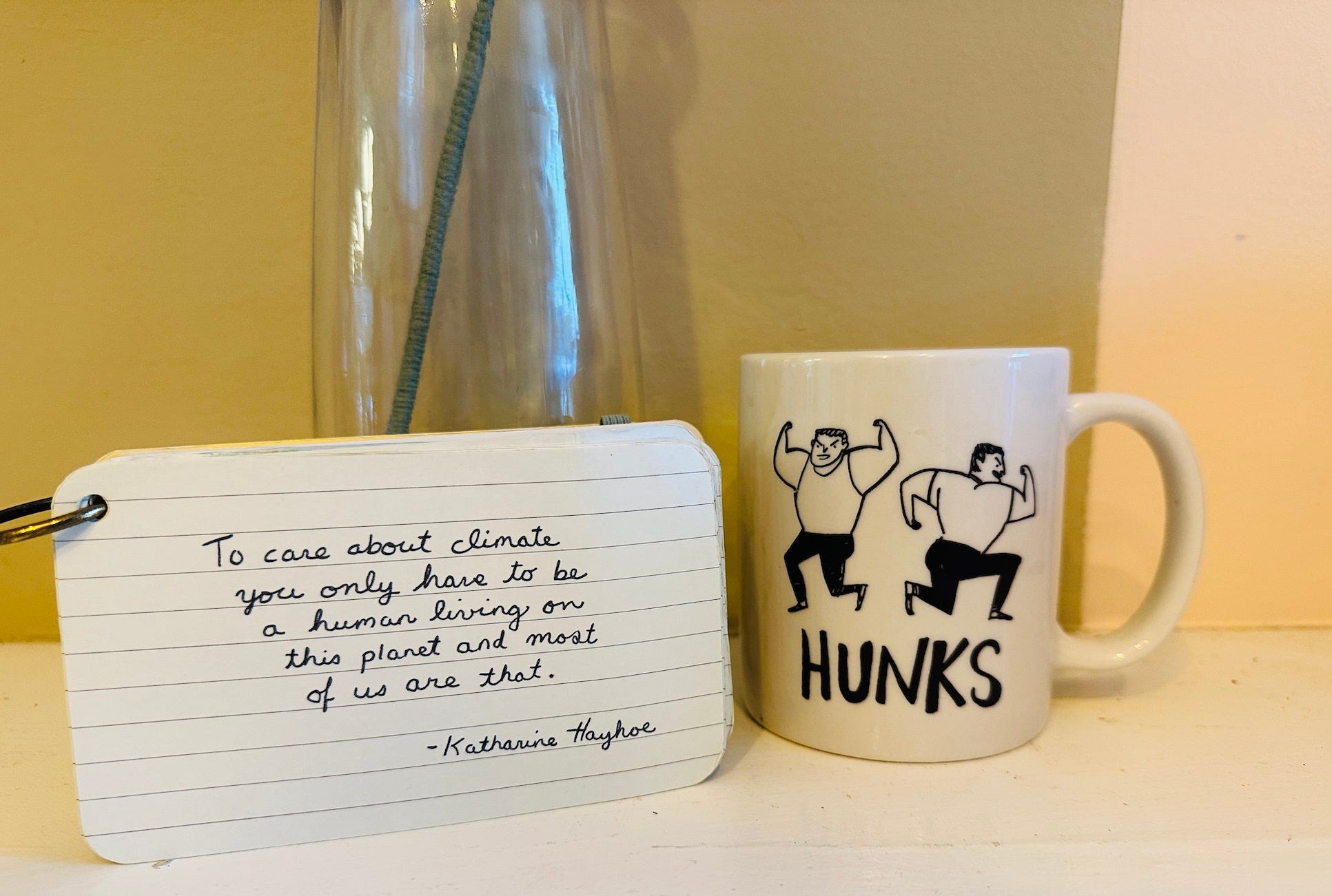
I love the name of my friend Katharine’s newish newsletter, Human on Earth. It sums up the reality of our time here in the most grounding of ways — we’re just humans on earth, humaning. It reminds me of one of David Byrne’s songs, Like Humans Do, which is about loving humanity, despite all our failings and flailings. There’s something about the phrase that provides a bit of a wry remove: this, both the gorgeous and the despicable, is just what humans do. The perspective doesn’t absolve me of wanting humans to do different, but it alleviates some of the pain of being a human on earth when humans do evil, tacky shit. It also reminds me that there are lots of beautiful, future-stewarding, and hilarious things that humans on earth do. Of course, the question it leads to is: What kind of human on earth am I? Are you? Is that guy over there in the flamingo jumpsuit?
I tried to change how I human on earth this year. My mode of working (furious) started to feel not just hamster wheely, but hamster wheel in a headwind. I was doing too much, at the expense of my creativity and health. And I would have kept at it, but for the surround-sound wisdom of so many brilliant friends and colleagues, and my own body, politely shouting STOP. I am stubborn AF so I ignored them until I didn’t. And then it still took me a while to figure it all out. I thought sabbaticals were for other people, people who don’t obsess over methane leaks.
In taking that break, I added the art back. All I have is my creativity (and great friends and fam and signature dance moves) in this world. My art time is what fuels powers not just my climate work, but my humanity. Without it, I’m slop, even if I don’t use Chat GPT.
I say all this in case the pain of our climate deadlines also keeps you up at night and messes with your functional humanity. “This is the critical decade,” said Tim Flannery in 2015 (eep). It is my forever struggle to take heed of that line while still remaining a human. That has sort of always been the leitmotif of this newsletter, but I thought balance was a thing I could tickety box, and not a lifelong effort, continually recalibrated as new wrinkles complicate our climate work. Wrinkles like democracy crumbling in around us.
Without turning all this into a hustle culture cliché about napping my way to greater productivity, I will say that slowing down for a good chunk of the year did make the subsequent work I took on more purposeful, effective, artful. It’s funny how good sleep does that.
I’ve also branched out, rebuilding old skills (PR) and broadening my climate arenas. For one of my clients, I’ve been working in the relatively new (to me) space of energy efficiency and learning so much. With good regulation of our top ten appliances, we have the power to prevent the release of the equivalent of 20% (!!!) of current global emissions by 2050. Like electrification, it’s inspiring because it is soooo darn doable. Someone tell the guy who just cut fuel standards.
I don’t really believe in resolutions unless they’re the binding climate action kind, but there are some things I want to focus on this year. In the spirit of slow and purposeful, I have just three: distribution, messaging to action, and convening.
Distribution: If a climate comms falls in the forest…
I won’t use the term enshittified because it’s jumped the snark, but in this garbage media landscape we must build with a new clarity, for decentralized power, and REAL (non-bot) communications. I am excited by what Gander and New_Public are doing. And though it’s harder than opening a jar with greasy hands to start a new social network (I see you, Mastodon), I think pragmatic optimism is the only way forward on this front. We don’t need a social network with a billion people on it. We need good information ecosystems of all kinds, and small batch, artisanal social media. I’d say “let a hundred decentralized social networks bloom,” but a) we know how that turned out, and b) it’s a bit clunky.
No matter the climate project this year, distribution and creator training is at the fore of my brain and strategy. Otherwise we’re just painting masterpieces in the dark and shouting at the bots. At the best of times, climate doesn’t market itself, and now is not the best of times. So what is the comms and marketing skew of any project, and what are the new tactics and channels we will use to make sure people get our messages? Absent the right answer to this question, the work fails.
A better narrative doesn’t mean more story. (It’s about action).
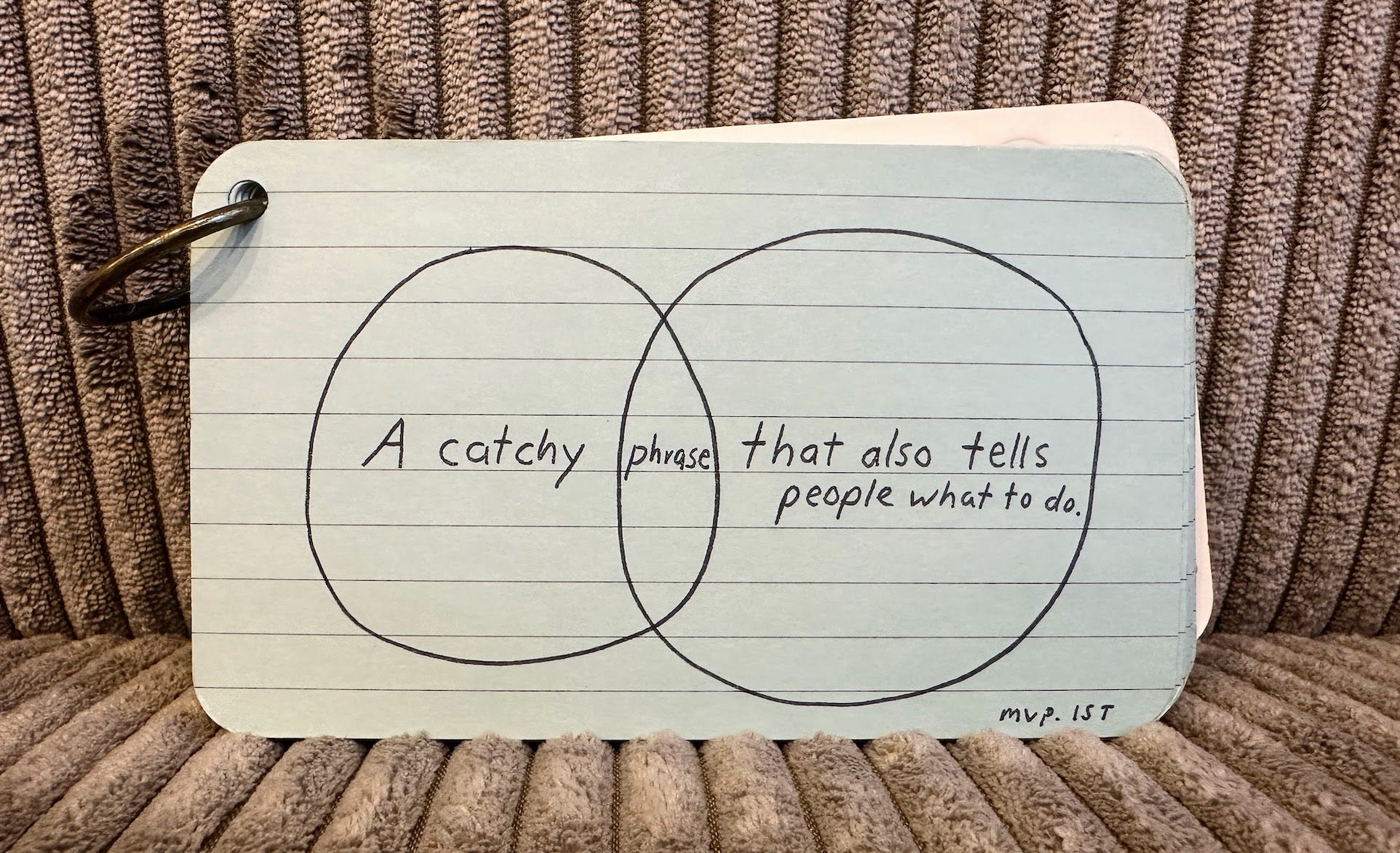
Everyone knows what the problem is: The right has message discipline and sticky/evil talking points. The left is fractured and verbose. But that doesn’t mean we can just default to punchy talking points repeated like a Sinclair news anchor. It means we need message discipline tied to real calls to action. (The right has this. It’s called Project 2025). We need better messaging AND better appeals.
What are the truisms you will repeat this year, as the noise surrounds, and the distractions mess with your head? And what will they drive people to do? It’s fun to think about one’s own message discipline.
For me:
We don’t need moonshots or miracles. (From doom to doing!)
Heck yes, electrotech. (Buy or advocate for electrification.)
Get out of my streams and into my park. (Bring people together.)
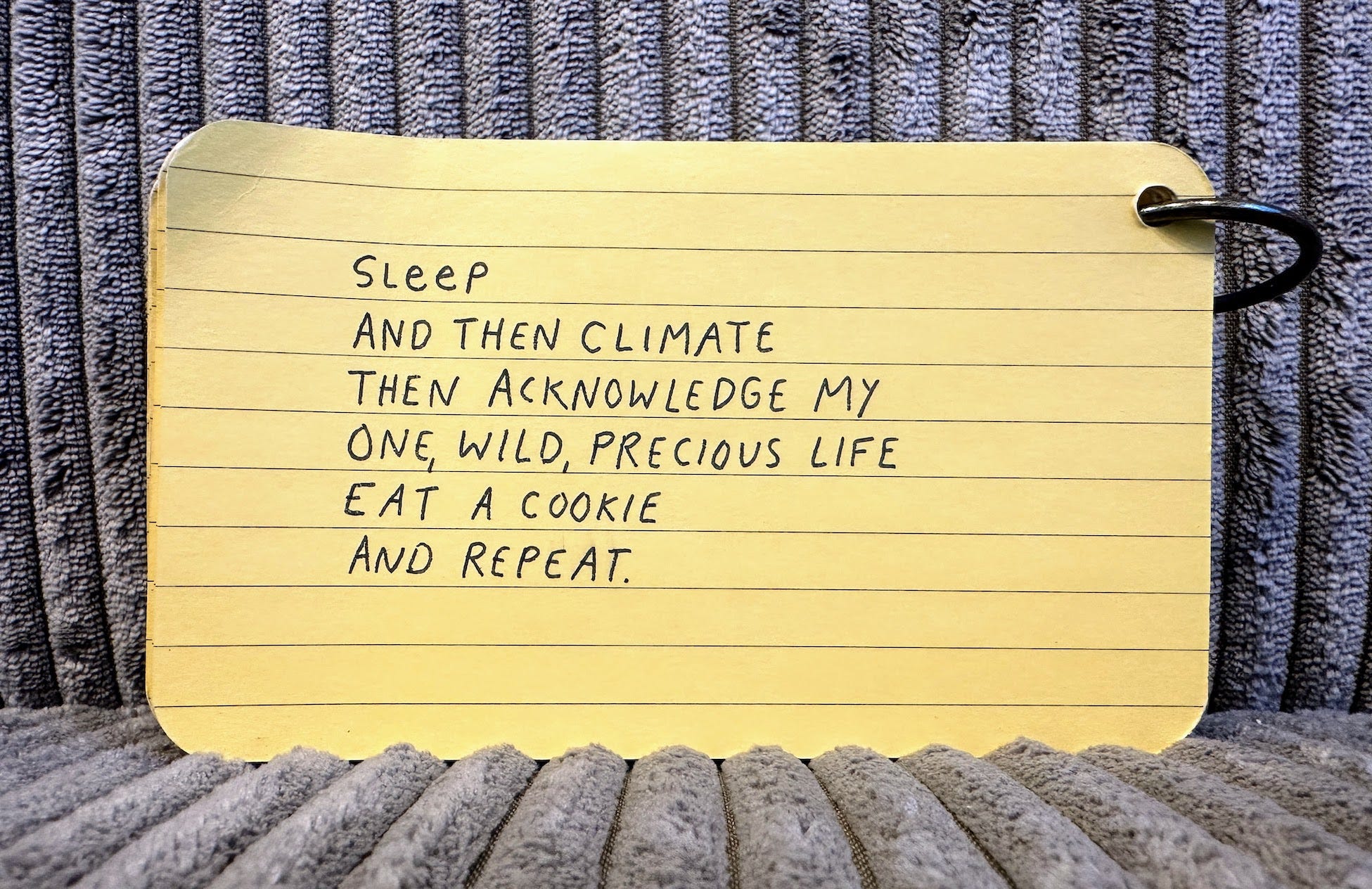
Cookies. (Self-evident.)
Mean to convene.
Lately, I’ve been thinking that art and community are one and the same, and together form the recipe for civic renewal and climate action. And there are so many incredible thinkers and writers and groups trying to foster togetherness, from my new faves, Elise Granata of Group Hug and Sam Pressler of Connective Tissue, to larger orgs like Weave: The Social Fabric Project, which give microgrants and training to individuals who want to make their communities more connected.
My friend Jode is so good at this. This year he set a goal to have conversations with 50 interesting people, and did. Together, we are relaunching my National Portrait Gallery thanks to his friend Monica, proprietor of the wonderful community hub that is Gallery 1065. (More on this below.)
How does this all connect to climate, you ask? My most cherished climate work is the stuff I do in my community because it feels real. I can see the heat pump on my neighbour’s front lawn. All of that happens because we know each other, and share ideas and resources and gingerbread recipes.
Of course, this is not easy. But I found the whole ‘being annoyed is the price we pay for community’ discourse a little weird, because duh. It’s a privilege to be annoyed by people, to have your ideas tested, and to have to figure out how to make sense of life and community with the people around you.
I feel lucky to have met so many incredible people this year, across climate retreats, client work, and beyond. When I’m out in the world engaging with people, I am reminded that humans on earth are generally good and smart and hunky.
(More: I’ve loved some of the great writing about the commodification of gathering as well. Sam Pressler on connection grift here, and Jenna Wortham on performative offlining here.)
This planet
Where will you focus your energies this year? Please let me know.

Methane is the new ozone layer
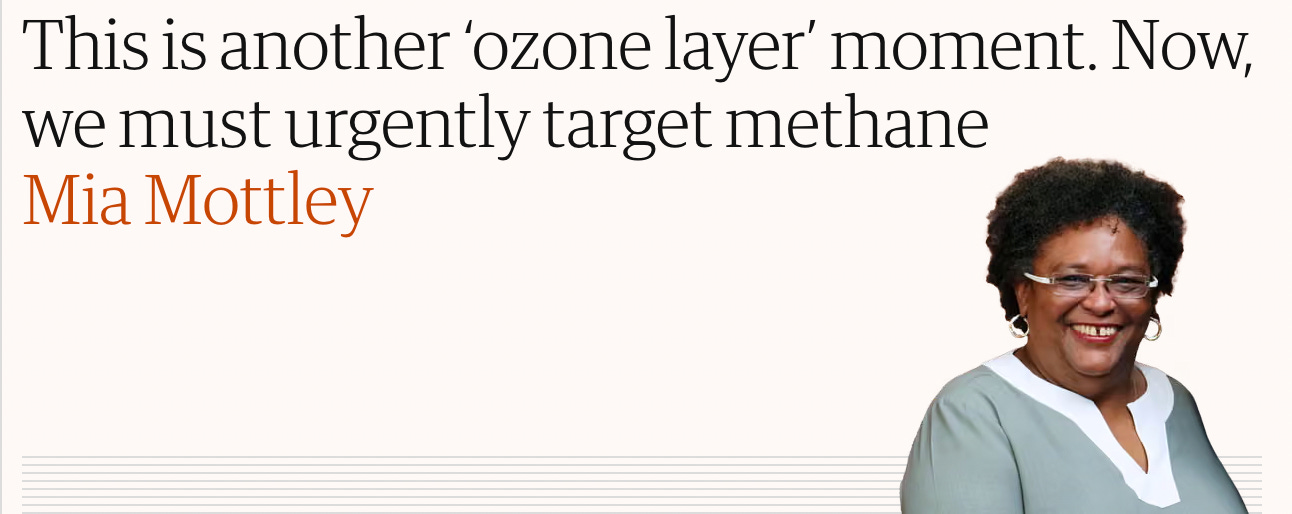
I think Barbados’ Prime Minister Mia Mottley gets it exactly right in this Guardian op-ed, both from a solutions and a framing perspective. She argues that a legally-binding methane agreement, much like the ozone-closing work established by The Montreal Protocol, could buy us time and help solve the methane crisis. The ozone layer is held up, rightly, as a relatively short-windowed success, demonstrating that we can indeed come together, globally, to solve big climate problems.
I’ve seen other would-be solvers of wicked problem use the ozone layer as a metaphor as well lately. The incredible Tristan Harris, in this worth-your-time Prof G interview, invokes ozone as a recipe for how we might put the AI genie back in the well-regulated bottle. I’m ok with all the ozone citations, because it does feel like people know this story. Leveraging it to show people that we can tackle methane seems like a good use of metaphor.
Stuff + things
Heat pump yourself
DIY heat pumps have been on my brain since I spent an hour chatting with a Mr. Cool rep at the AHR convention a few years ago. The refrigerant was the issue — you still had to call a contractor to do your R22. But it looks like that propane (pain?) problem is solved by a new version of DIY heat pumps that cost ~$2,500. Like balcony solar, these could be game-changing.
Hamilton, hero
Katharine Hamilton has been a favourite presence on the Energy Gang, and now Open Circuit, for something near a decade. She’s a bit of a hero of mine, and I’ll miss her voice a lot. I loved this final tribute episode where Jigar Shah and Stephen Lacey suitably fete her, and I love her words about finding dignity in any job. A true energy savant, but also a workplace and general life savant.
Leapfrogging literature
Did you read Ian McEwan’s What We Can Know? It’s a climate change novel that leapfrogs over the horrible effects of climate change. Millions of deaths, and a century later, people eat protein cakes and fetishize the early aughts. I loved the same quote the always brilliant Dwight Garner singled out in his NYTimes review:
One thing that “What We Can Know” does, improbably enough, is make one nostalgic for the present. Thomas and Rose, a century in the future, list the things they never got to see. Here is Thomas:
My list was long — the suspension bridges, the orchestras, street parties and a thousand forms of music festivals, and people’s gardening and cooking, their need for holidays, extreme sports, historical enactments, gay-pride carnivals, the risks they took with A.I., the sense of humor, the safe airplanes, the passion for pointless sports. A hundred thousand at a football match!
Yes. I’m always nostalgic for the present. Meanwhile, my daughter thought all the characters were morally questionable jerks. What did you think?
Thanks to Chris Hatch’s reader recommendation roundup, I’m reading Rachel Kushner’s Creation Lake and enjoying it. Eco-espionage in the French countryside. Yes, please.
Every job is a climate job. These are Climate Jobs.
These are hard times for many people who work in climate, so I’m delighted to share these cool jobs from some friends of the Stack (can i say that? Too dorky?). Note: I’m not a recruiter for these. Double note: I don’t believe in sharing jobs that don’t have salaries listed. Note note note: good luck. (And if you have jobs you want to share, please send my way, with the caveat that most of the readership of this newsletter is Can, US, UK, and Aus).
Ecojustice is hiring a communications strategist. Lindsay Beck is the best. Go work here.
My Climate Plan is hiring for a National Organizing Director and a BC community organizer. Could not love this org more, and they’ve got big plans for this year.
The National Portrait Gallery of Canada of Bloorcourt
I am so excited to be bringing back the National Portrait Gallery of Canada after an almost twenty-year hiatus. The show opens January 9th at Gallery 1065 in Toronto. Please come if you’re near!
Thank you
Thank you as always for reading this at times overlong newsletter. I appreciate your insights. If you like it, please click the ♥️ and share it.
Wishing you a healthy, democratic, cozy year,
Sarah
People dancing
Arty Supreme
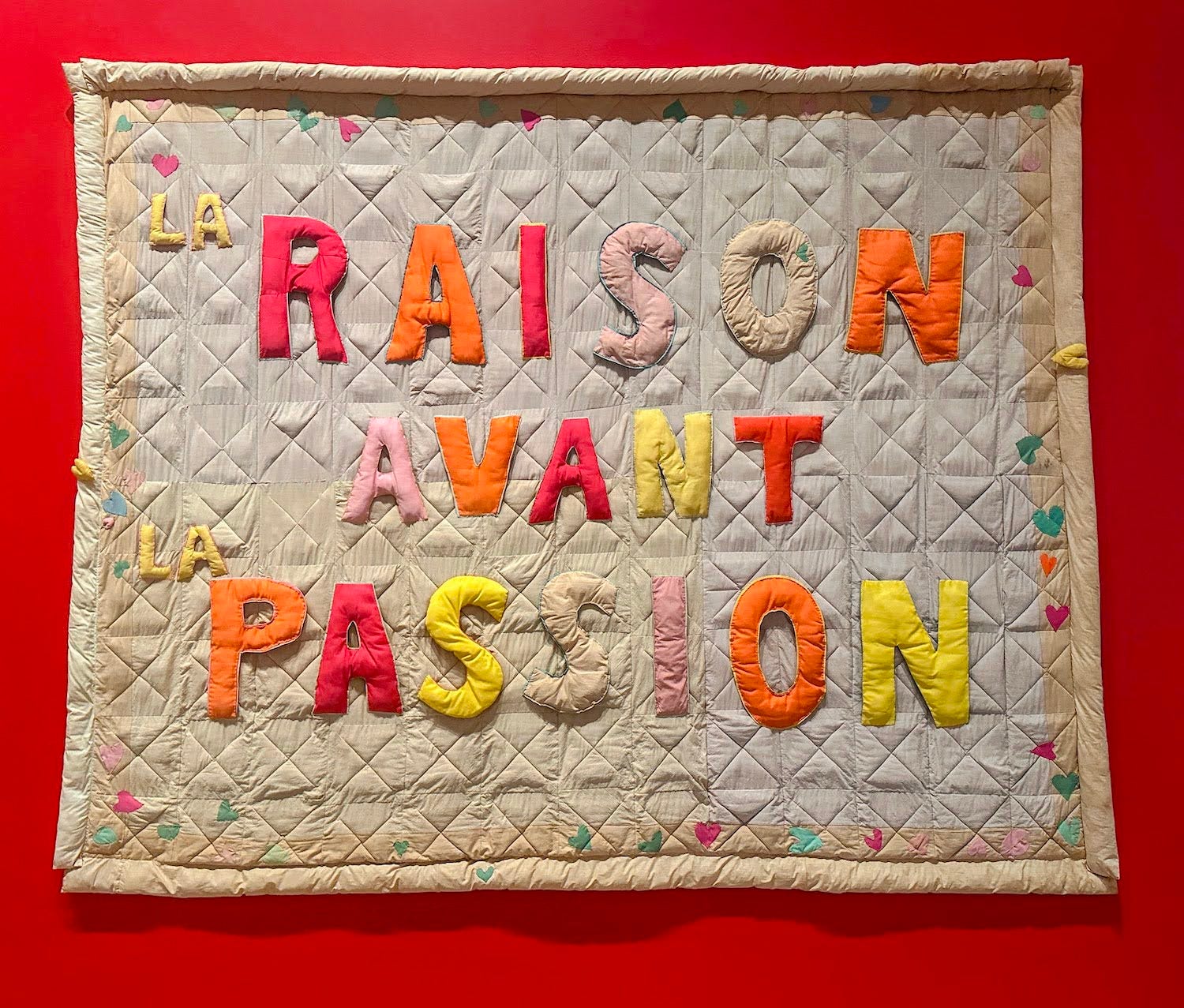
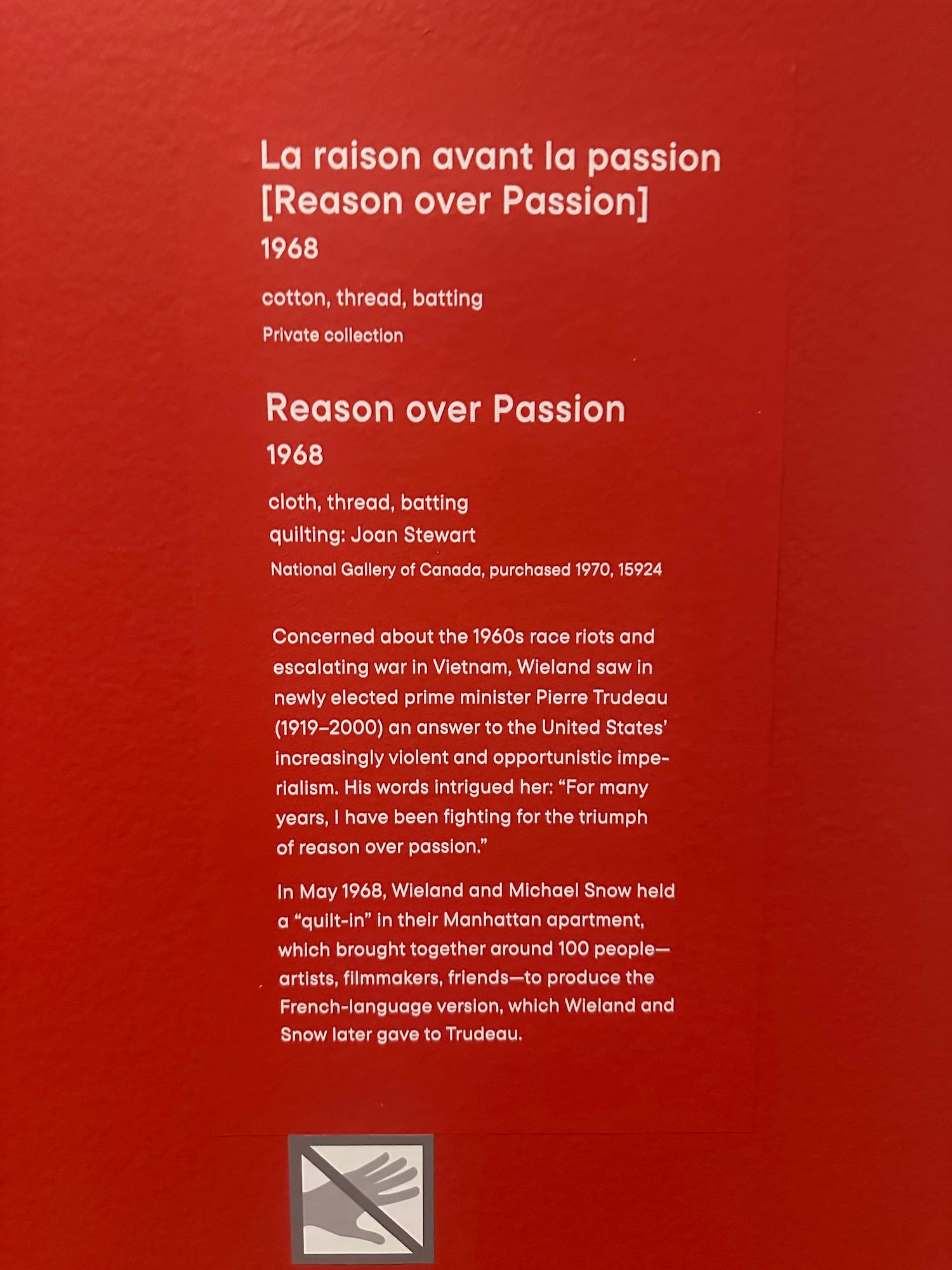
I saw more art this year. Run don’t walk to see the Joyce Wieland show (it’s on til January 4th). (Also, Marty Supreme is really good.)
Love this post. Have gotten cranky since I retired and withdrew from too many groups. Just need to be more discerning.
Instagram got meaner and won’t let me watch people dancing. 😢
Have to disagree on Marty Supreme. Even the wonderful Endo ending couldn’t erase tbe bad taste of the ridiculous violence for me.
And to be clear, I am ableto find humor in some movie violence —like Fargo.
Sarah, glad you enjoyed your well-deserved sabbatical .
This letter is a treasure trove!!!